Dental Implants Explained: How They Work and What to Expect
Losing a tooth can change more than the way your smile looks. It can make chewing harder and affect nearby teeth over time. Dental implants offer a way to replace the missing tooth from the root upward. They can support a fixed replacement tooth that looks and functions much like a natural tooth.
If you are considering dental implants in Laurel, MD, understanding the treatment can make your next conversation easier. This guide explains what dental implants are, when they may be needed, how the parts work together, and what happens during treatment.
What Are Dental Implants?
A dental implant is a small post placed into the jawbone to replace the root of a missing tooth. The implant provides a stable base for a replacement tooth.
Unlike a removable denture, an implant stays in place after treatment. A traditional bridge can replace a missing tooth too, but it usually relies on nearby teeth for support. An implant does not require the same type of support from neighboring teeth.
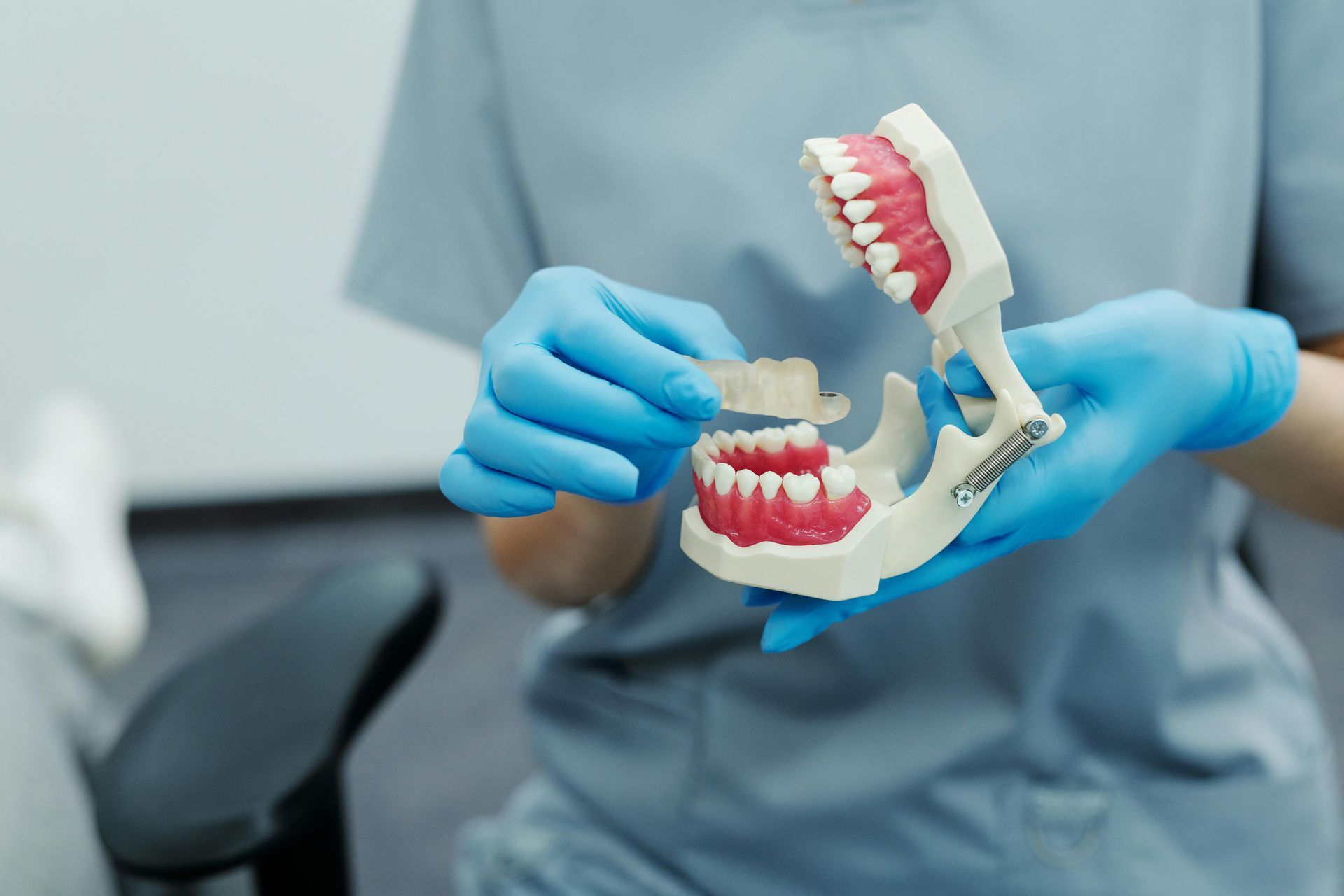
A complete implant usually has three main parts. The implant post sits in the jawbone. The abutment connects the post to the replacement tooth. The crown forms the visible part that you use for biting and chewing.
For someone looking for a Dentist in Laurel, MD, an evaluation can help determine whether an implant fits their needs.
When Do We Need Dental Implants?
Dental implants may be considered when one or more teeth are missing. Tooth loss can happen because of severe decay, gum disease, an injury, or a tooth that cannot be restored.
For example, someone who loses a molar may struggle to chew comfortably on that side. Replacing the tooth can restore a more complete chewing surface.
Missing teeth can also affect the spacing of nearby teeth. Over time, surrounding teeth may shift into the open space. That can change how the teeth meet when you bite.
Still, every missing tooth does not automatically require an implant. A dentist needs to examine your teeth, gums, jawbone, and overall oral health before recommending treatment.
What Parts Make Up a Dental Implant?
Think of an implant as a replacement root with a tooth attached to it. Three main parts work together to complete the restoration.
The implant post is placed inside the jawbone. It acts as the foundation for the replacement tooth.
The abutment connects the implant post with the crown. It sits above the implant and provides the connection needed for the final restoration.
The crown is the visible replacement tooth. It is shaped to fit your bite and can be designed to blend with the surrounding teeth.
This simple structure helps explain why implants differ from removable dentures. The implant replaces the root, while the crown replaces the visible tooth.
How Do Dental Implants Work?
Dental implants work through a healing process called osseointegration. During this process, the jawbone grows around the implant surface and helps hold it in place.
The process starts after the implant post is placed in the jawbone. The surrounding bone then needs time to heal and form a stable connection with the implant.
That healing period matters because the implant needs enough stability before it supports the final crown. Your dentist can monitor the healing process during follow-up visits.
Once the implant has healed properly, the abutment can connect the implant to the crown. The completed restoration then provides a fixed tooth replacement.
Treatment time varies from patient to patient. Some people may need additional treatment before implant placement. Bone grafting may be recommended when there is not enough bone to provide suitable support.
What Happens During the Dental Implant Procedure?
Dental implant treatment usually happens in several stages. The exact sequence depends on your oral health and treatment needs.
Consultation and planning: The process begins with an examination of your teeth, gums, and jaw. Your dentist may use dental X-rays or 3D imaging to examine the implant site. Your medical history also helps the dental team plan treatment safely.
Tooth removal when needed: Some patients need a damaged or unhealthy tooth removed before receiving an implant. In certain cases, tooth removal and implant placement may be planned together.
Implant placement: During implant surgery, the dentist places the implant post into the jawbone. Appropriate anesthesia is used to keep the procedure comfortable.
Healing period: After placement, the implant needs time to integrate with the surrounding bone. Your dentist may provide a temporary replacement tooth during this stage when appropriate.
Abutment and crown: Once the implant has healed and is stable, the abutment is connected. The final crown is then placed over the completed implant structure.
Some patients need bone grafting or another preparatory procedure before implant placement. Your dentist can explain whether those steps are needed after examining your mouth.
What Are the Benefits of Dental Implants?
Dental implants can provide a fixed way to replace missing teeth. They may help people chew more comfortably when tooth loss has made eating difficult.
Because the replacement tooth is attached to the implant, you do not remove it like a traditional removable denture. That can make everyday routines simpler.
Replacing a missing tooth can also help maintain the existing spacing between neighboring teeth. The replacement can restore a more complete chewing surface and support normal mouth function.
Implants can also provide a natural-looking result. The crown can be designed to match the shape, size, and appearance of nearby teeth.
Long-term results still depend on good oral hygiene, regular dental visits, and individual health factors. An implant should not be viewed as a replacement for daily dental care.
Who Can Get Dental Implants?
Many adults with missing teeth may be candidates for dental implants. However, candidacy depends on individual oral health and treatment needs.
Healthy gums and enough supporting jawbone are important for implant treatment. Your dentist will evaluate the planned implant site before recommending placement.
Some patients do not have enough bone at the implant site. Bone grafting may sometimes provide the additional support needed for future treatment.
Other factors can affect treatment planning. Active gum disease, poor oral hygiene, smoking, and certain health conditions may increase treatment risks or affect healing.
A dental examination is the best way to determine whether implants are appropriate for you. Your dentist can also discuss other tooth replacement options when an implant is not the right choice.
What Risks Should You Consider?
Dental implant treatment involves surgery, so some short-term effects can occur. Soreness, swelling, bruising, and temporary discomfort may happen after the procedure.
Less common complications can include infection, problems with healing, nerve irritation, or implant failure. Problems can also develop around an implant if the surrounding tissues become inflamed.
Oral hygiene plays an important role after treatment. Bacteria and plaque can affect the tissues around an implant when they are not controlled.
Smoking can also interfere with healing and may increase the risk of complications. Existing gum disease should be addressed before implant treatment whenever appropriate.
Following your dentist's aftercare instructions can help protect the healing site. Regular follow-up visits also allow your dental team to check the implant and surrounding tissues.
Conclusion
Dental implants replace a missing tooth root and support a replacement tooth. The treatment involves planning, implant placement, healing, and final restoration.
Your oral health, jawbone, gums, and individual treatment needs all affect whether implants are suitable. If you are considering dental implants in Laurel, MD, a dental evaluation can help you understand your options.
Dental Care of Laurel Lakes can discuss your tooth replacement needs and help you understand the next steps.
#SHARE on Social Media